
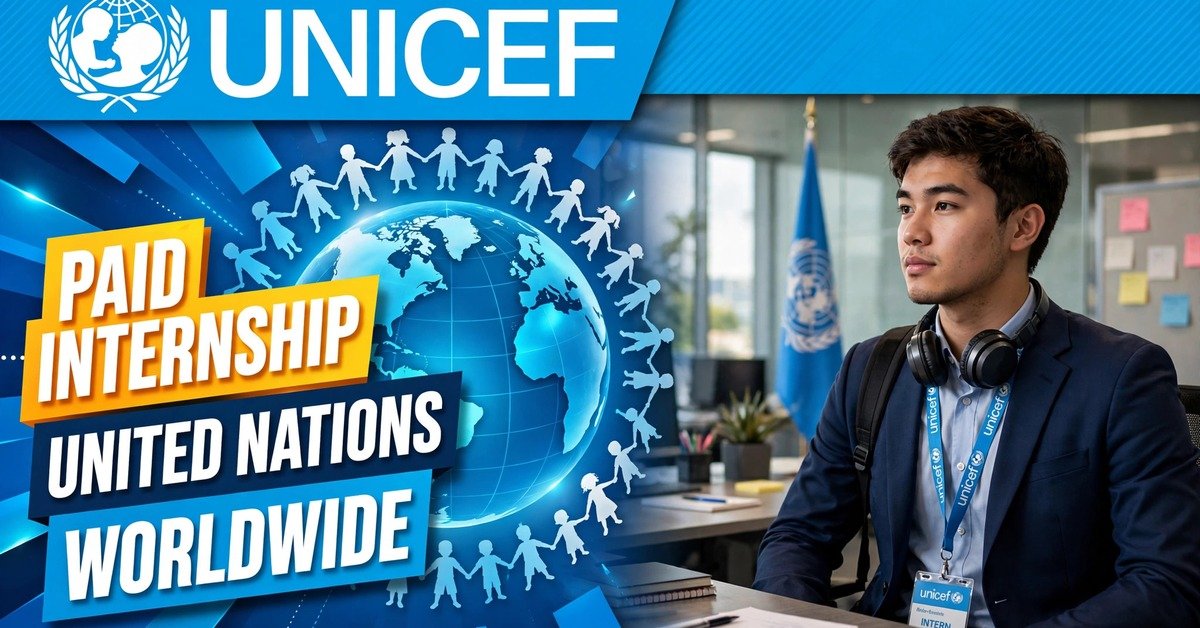
UNICEF runs a paid internship programme in its offices around the world, open to students and recent graduates. Internships last between 6 and 26 weeks, can be full-time or part-time, and come with a monthly stipend — plus, where funding allows, a one-time lump sum towards your travel and visa costs.
There is no single deadline. UNICEF posts internship vacancies throughout the year, each with its own closing date. The opportunity is always open in principle — but only if you watch for new postings and apply quickly.
How the rolling system actually works
Unlike a scholarship with one annual deadline, this is a standing programme filled through individual vacancy notices. A country office in Nairobi, a regional office in Bangkok or headquarters in New York each posts internships when they need someone — usually with only a few weeks to apply.
This creates a specific strategy problem. You cannot prepare one application and wait for a deadline months away — you need your CV and documents ready so you can move fast when the right posting appears. Check the UNICEF careers portal regularly and set up job alerts, because strong postings attract many applicants within days.
Who can apply
You must be at least 18 years old. You need to be enrolled in an undergraduate, graduate or PhD programme, or to have graduated within the past two years. And you must be proficient in at least one of UNICEF’s working languages: English, French or Spanish.
Each posting adds its own requirements, such as a relevant field of study or specific skills. A communications posting and a data posting will ask for very different backgrounds — read every notice carefully and apply only where your profile genuinely matches. Generic applications to every posting waste your time and the recruiter’s.
What you get: the honest breakdown
The monthly stipend is real — this is a paid programme. UNICEF also offers a one-time lump sum towards travel and visa costs, but only where funding is available for that posting. Do not assume every internship includes it; the vacancy notice is the only reliable source.
The 6-to-26-week range matters too. A six-week placement is a short, focused assignment — good for a specific project and a CV line. A six-month placement is closer to a real job, with deeper work, stronger references and a real understanding of the UN system. Longer placements almost always teach you more, so prefer them when you have the choice.
Key details at a glance
| Detail | Information |
|---|---|
| Organisation | UNICEF (United Nations Children’s Fund) |
| Programme | UNICEF Internship Programme |
| Locations | UNICEF offices worldwide |
| Duration | 6 to 26 weeks |
| Work pattern | Full-time or part-time |
| Pay | Monthly stipend; one-time travel/visa lump sum where funding allows |
| Eligibility | 18+, enrolled in undergrad/grad/PhD or graduated within past 2 years |
| Languages | Proficient in English, French or Spanish |
| Deadlines | Rolling — each posting sets its own closing date |
Full-time or part-time: which should you pick?
Full-time gives you the complete experience — you are part of the team and your work has visible weight. If you can afford the time, full-time is the better career investment. Part-time exists for students who must keep studying, and it is a genuine option, not an afterthought.
Be realistic, though: part-time means less learning, fewer relationships and less visible work in the same period. If your main goal is a strong reference and real UN experience, choose full-time whenever your schedule allows.
How to apply
First, get your documents ready now, before the posting you want appears: an updated CV, proof of enrolment or recent graduation, and certificates for your language skills. Second, search the UNICEF careers portal listings and read each vacancy notice completely — requirements, duration, location and what it covers.
Third, tailor your application to that specific posting: mention the office, the team’s work and the skills the notice asks for. A generic letter that could go to any UN agency will not stand out. Fourth, submit well before the closing date — and keep checking back, because new internships appear all year.
Also see: Green Climate Fund Internship Programme · FAO Paid Internship Programme in Rome
What actually gets you selected
Postings receive heavy competition, and screening is practical: does this person have the skills for this assignment? The strongest applications show a direct match between what the notice asks for and what you have done. If it wants social media skills, name the accounts, tools and results you have actually handled.
Your motivation letter should answer one question: why this office and this team? A sentence showing you know the country office’s current programmes separates you from applicants who sent the same letter to fifty postings. That research takes an hour — the highest-return hour in the whole process.
Treat language proficiency as a real requirement, not a formality. If a posting asks for French and you list “basic French,” you will not pass the screen. Claim only what you can actually use in a work meeting.
Who should not apply
Do not apply if you graduated more than two years ago — the cut-off is firm. Do not apply if you cannot work in English, French or Spanish at a professional level. And do not apply to postings whose skill requirements you clearly do not meet; each office hires for its own needs, and mismatched applications go first.
Frequently asked questions
Is the UNICEF internship really paid?
Yes — interns receive a monthly stipend, and some postings add a one-time lump sum towards travel and visa costs where funding allows.
When is the deadline?
There is no single deadline — applications are rolling, and each vacancy notice sets its own closing date.
Can I do the internship remotely?
Some postings are remote, some in-person; each vacancy notice states the arrangement.
Does an internship lead to a UNICEF job?
Not automatically, but UN system experience, professional references and a new network genuinely help future UN applications.

One thought on “UNICEF Internship Programme (Paid, Worldwide)”